
Insights
Missed food safety checks can become much more than an administrative problem. Explore when serious breaches can lead to prosecution, fines or imprisonment, and how to protect customers and your business.
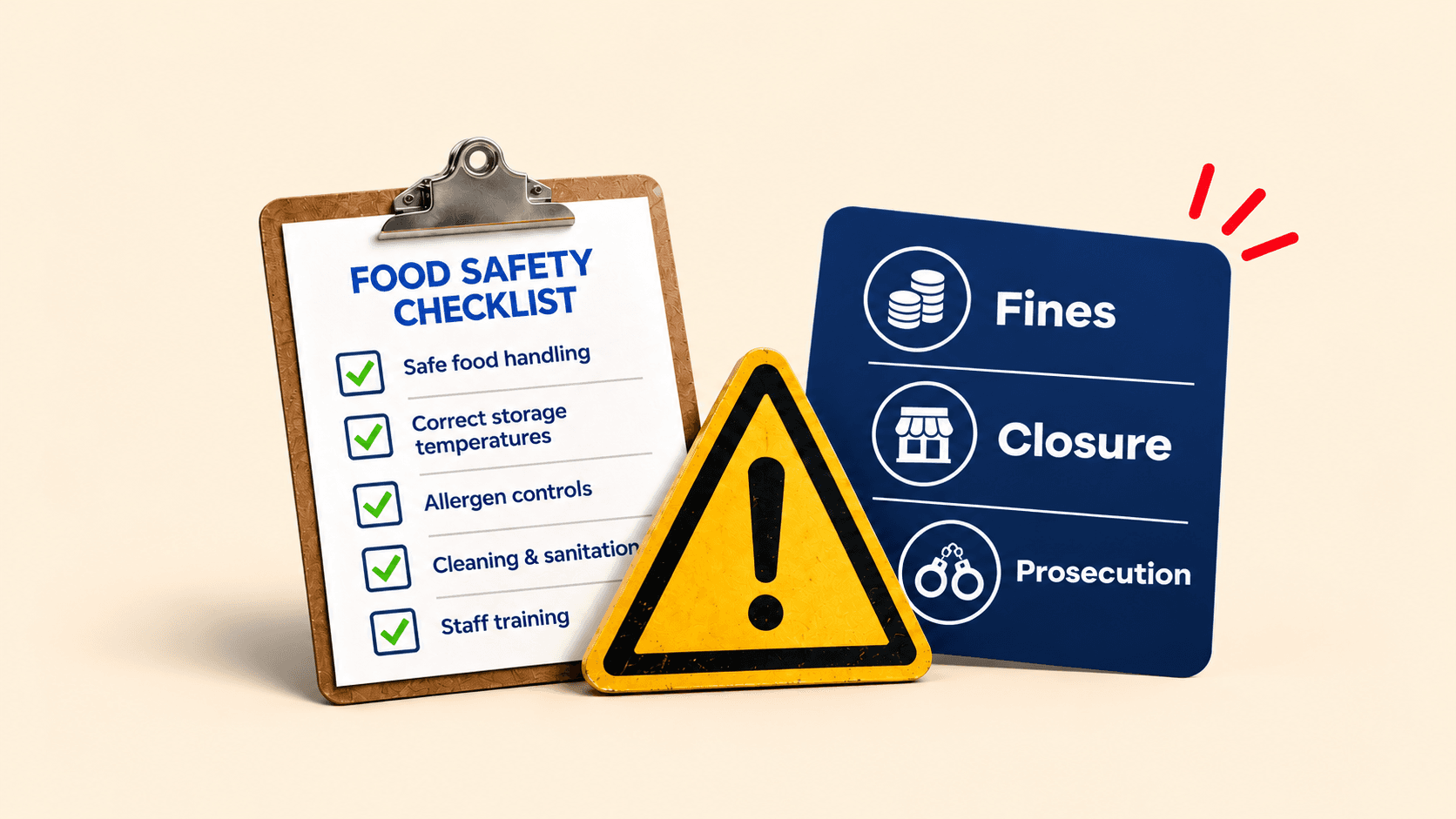
A busy shift. A fridge reading nobody recorded. A cleaning action that was never followed up. An allergen procedure that has not been reviewed since the menu changed. On their own, these may look like small operational oversights. Together, they can expose a business to serious food safety risks.
For restaurants, takeaways, caterers and multi-site operators, the consequences can extend beyond a disappointing hygiene rating. Where unsafe food handling or significant breaches occur, customers may be harmed, enforcement action may follow and responsible individuals can, in serious cases, face criminal prosecution.
Can poor food safety compliance really lead to prison?
Yes, but the circumstances matter. In England, certain offences under the Food Safety and Hygiene (England) Regulations 2013 are punishable on conviction in the Crown Court by an unlimited fine, imprisonment for up to two years, or both. The Sentencing Council confirms this maximum for relevant offences by individuals.
This does not mean that a single missed form, low hygiene rating or allegation of food poisoning automatically results in a criminal conviction. Prosecutors must establish an offence, and sentencing depends on factors such as culpability, harm or risk of harm, and the relevant legal framework.
What can go wrong when checks fall behind?
Food safety systems work only when they reflect everyday practice. Problems can emerge when staff rely on memory, records are completed retrospectively, or a procedure is left unchanged after a menu, supplier or process changes.
Common warning signs include incomplete cooking or cold-storage temperature logs, unresolved corrective actions, inconsistent cleaning records, weak allergen communication, gaps in training and missing evidence that risks are being controlled. The specific controls needed depend on your operation.
Food poisoning is a human risk before it becomes a legal risk
A breakdown in safe handling can expose customers to harmful microorganisms, contamination or undeclared allergens. The effects can be severe, particularly for vulnerable customers. A food business should focus on preventing harm, not just being able to produce paperwork when an inspector arrives.
If a serious incident occurs, accurate records help establish what controls were in place, what happened and how the team responded. GOV.UK advises that businesses involved in a food safety incident may need to show their records as evidence of how they keep food safe.
What might an enforcement officer do?
Local authority food safety inspectors may examine food handling, premises and the management systems, training and procedures used to maintain hygiene. Inspections can be unannounced.
Depending on the findings, a business might receive instructions to improve, a hygiene improvement notice or, for particularly serious risks, measures restricting the use of premises, equipment or processes. Some cases may lead to prosecution. The response depends on the facts and legal tests, not simply the numerical food hygiene rating.
What does up-to-date compliance look like?
A practical food safety management system based on HACCP principles identifies hazards, sets and monitors critical controls, checks whether measures work, records what happens and documents corrective actions when something goes wrong.
“We can help before it’s too late. Too often, by the time we get the call, the business is already on the back foot — trying to correct issues quickly and chasing a follow-up inspection. That’s stressful, disruptive and expensive for everyone involved. We’d rather help before it gets to that point and becomes messy.”
David, Verifye
Regularly review procedures when menus, suppliers, equipment or operations change. Make sure staff understand what to check, managers can see overdue actions, and records reflect what actually happened rather than what should have happened.
A five-point operational check
1. Confirm that your HACCP-based procedures reflect the food you currently prepare, store and serve.
2. Review whether temperature, cleaning, allergen and other critical checks are completed consistently.
3. Identify overdue actions and ensure someone is responsible for resolving and documenting them.
4. Check that staff training is current and that employees know how to escalate a food safety concern.
5. Make records easy to retrieve and review before an inspection or incident, not only afterwards.
How Verifye can help
Verifye combines paperless daily compliance checks and record keeping with practical food safety support, site inspections and corrective-action oversight. That can make problems easier to spot, document and resolve before they grow.
Software alone cannot make food safe or guarantee a five-star rating. But clear responsibilities, reliable records and timely interventions are foundations of a stronger, more accountable food safety culture.
Protect your customers first. Protect your business by doing the basics well.
The objective is not to work out how close a business can get to a legal penalty. It is to make safe food handling routine, visible and verifiable every day. If your team is unsure where the gaps are, a practical food hygiene review is a sensible starting point.
Explore Verifye’s food hygiene review and expert site inspection services to understand where your current processes may need attention.
This article provides general information focused on England, not legal advice. Penalties and enforcement depend on the specific legislation, jurisdiction and facts of each case.
Frequently asked questions
Can a restaurant owner go to prison for a food safety breach?
Does one missed temperature check automatically lead to prosecution?
What records should food businesses keep up to date?
Can a business be closed after a serious food hygiene inspection?
How often should HACCP procedures be reviewed?
How can Verifye help reduce food safety risks?
Sources and further reading
Sentencing Council — Individuals: Breach of food safety and food hygiene regulations (updated 5 October 2026): https://sentencingcouncil.org.uk/guidelines/individuals-breach-of-food-safety-and-food-hygiene-regulations/
Food Safety and Hygiene (England) Regulations 2013, regulation 19: https://www.legislation.gov.uk/uksi/2013/2996/regulation/19
GOV.UK — Food safety management systems: https://www.gov.uk/food-safety-management-systems
GOV.UK — Food inspections: https://www.gov.uk/running-food-business/food-inspections
GOV.UK — Managing food safety: https://www.gov.uk/government/publications/managing-food-safety/managing-food-safety
